Kitchen Floor Degreasing
Degreasing loosens fats, oils and adhered cooking residue. The process may require pretreatment and additional agitation near fryers, ranges and food-preparation stations.
Serving Overland Park, Kansas & surrounding areas
Open 24/7
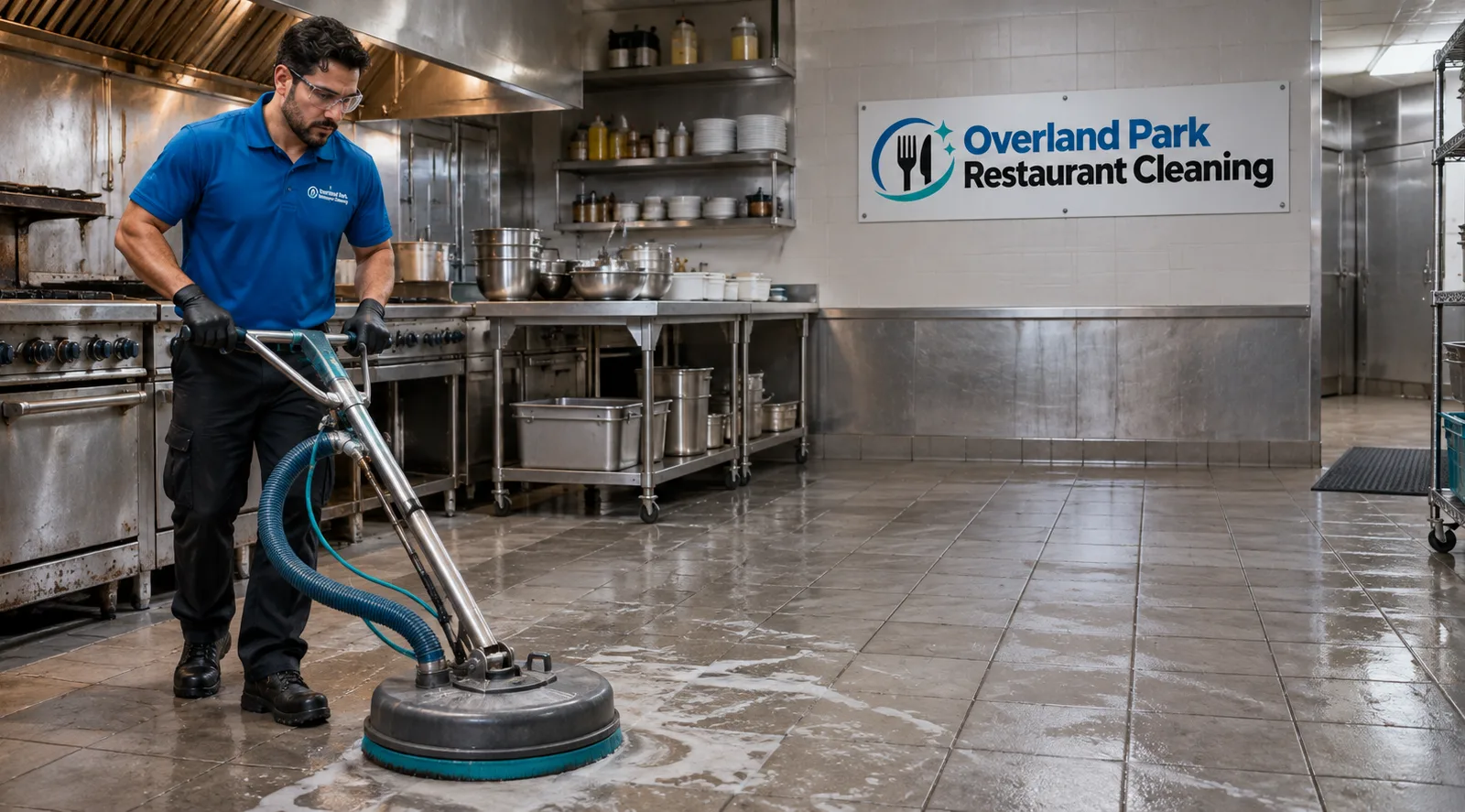
Kitchen Floor Cleaning · Overland Park
Remove built-up grease, food residue and grime from tile and grout with a cleaning plan shaped around your kitchen, flooring and operating schedule.
Floor Care
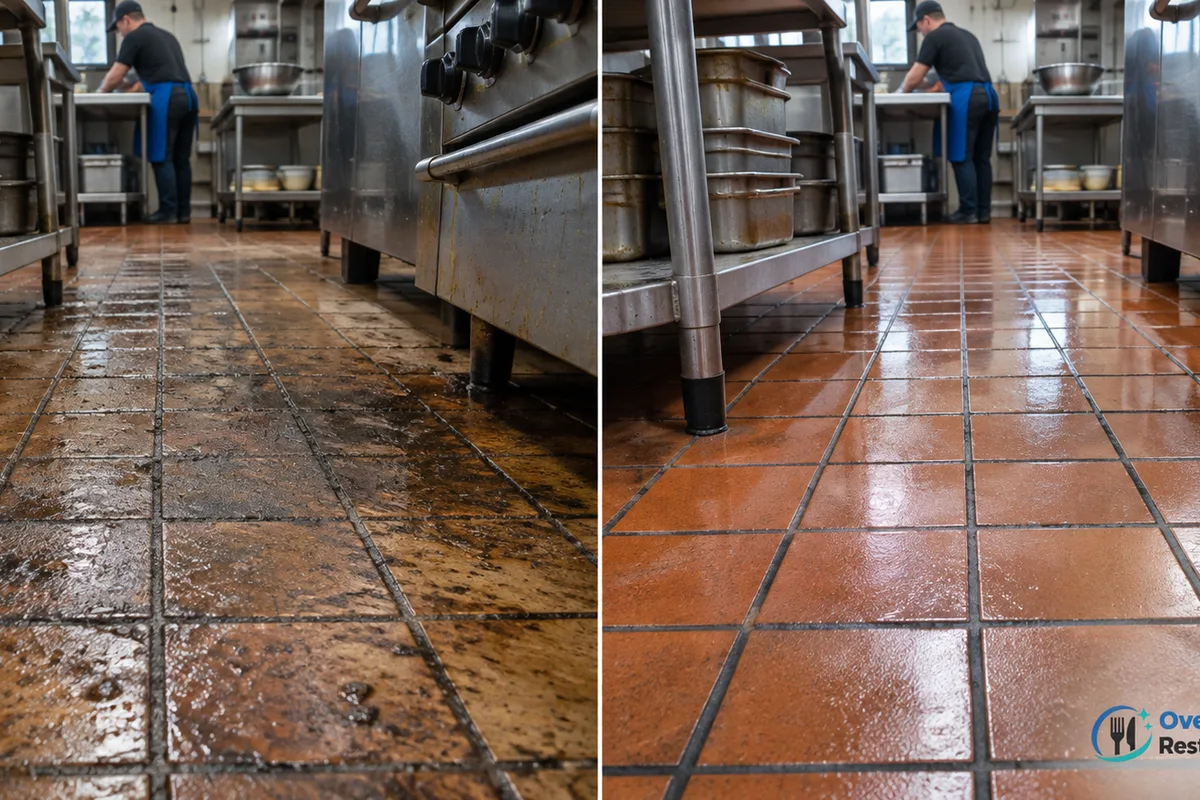
Commercial Kitchen Floor Cleaning targets the greasy film, tracked-in soil and residue that routine mopping can leave behind. Over time, that buildup can darken grout, make textured tile look dull and contribute to slick conditions around cook lines, dish areas and service corridors.
Overland Park Restaurant Cleaning evaluates the floor before selecting chemistry, dwell time and agitation. For commercial kitchens near West 108th Terrace and throughout the surrounding area, a restaurant company Overland Park homeowners rely on brings the same careful approach to scope-setting. The plan accounts for floor material, grease load, equipment access, drainage and the hours available for drying.
Professional cleaning supports daily sanitation work rather than replacing it. A deep service removes adhered soil from the tile surface and grout lines so the kitchen team has a cleaner baseline for its regular sweeping, mopping and spill response.
Surface-Specific Cleaning
Quarry tile and ceramic tile are common in food-service areas because they tolerate demanding use, but their joints and textured surfaces can hold grease. Restaurant tile cleaning typically combines a compatible degreaser, controlled dwell time, mechanical agitation and soil recovery. Edges, corners, transitions and the floor near fixed equipment require separate detail work because large machines cannot reach them effectively.
The cleaner must match the surface. Acidic products can damage cement-based grout and react with some flooring materials, while an overly strong alkaline cleaner may leave residue when it is not properly rinsed and recovered. Testing a small area helps establish the right dilution and agitation before the full floor is treated.
Busy commercial corridors near College Boulevard and Metcalf Avenue can mean frequent deliveries, staff traffic and tracked-in grit. Kitchens serving the Oak Park retail area may also experience heavy meal-period traffic. These operating conditions affect how often the entry path, cook line and dish area need deep cleaning, so frequency should be based on actual soil rather than a fixed calendar.
Cleaning Specification
Degreasing loosens fats, oils and adhered cooking residue. The process may require pretreatment and additional agitation near fryers, ranges and food-preparation stations.
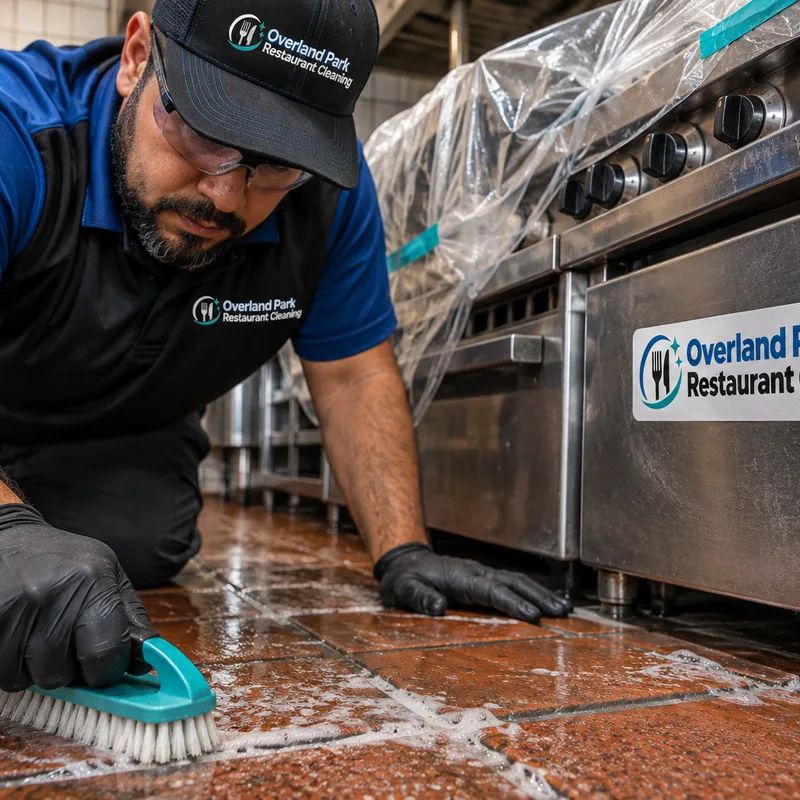
Grout lines are scrubbed with equipment and tools suited to narrow joints. Cleaning can improve the appearance of sound grout, but it cannot repair missing, cracked or chemically damaged joints.
Wall lines, equipment legs, door thresholds and tight corners receive detail work where an automatic scrubber or rotary machine cannot operate.
Suspended grease and detergent must be recovered rather than spread across the floor. Rinsing and extraction reduce residue that can attract new soil or leave the surface tacky.
When included in the agreed scope, compatible hard floors in server stations, food pickup areas and back corridors can be cleaned during the same scheduled visit.
The recommended interval considers meal volume, cooking methods, floor texture and the effectiveness of daily cleaning. High-grease zones may need attention more often than low-soil areas.
Cleaning Process
Step 1 of 6
We identify the flooring type, grout condition, grease concentration, drainage, sensitive surfaces and access limitations. The scope also records movable equipment and items that must remain in place.
Step 2 of 6
Service is coordinated for a practical low-traffic period. The kitchen should be clear of active food preparation, and loose items should be removed so technicians can reach the agreed floor area.
Step 3 of 6
Loose debris is removed before a compatible cleaning solution is applied. Greasy zones receive enough dwell time for the chemistry to work without being allowed to dry on the floor.
Step 4 of 6
Mechanical equipment breaks up bonded soil across open areas. Hand tools address grout joints, corners, thresholds and spaces around fixed equipment.
Step 5 of 6
The loosened soil is collected with suitable recovery equipment. The floor is rinsed as needed to remove detergent and suspended grease rather than redistributing them.
Step 6 of 6
We review the cleaned area, note damaged grout or flooring that cleaning cannot correct, and explain when the surface can return to normal use. Fans or increased ventilation may help when conditions allow.
Zone-Based Degreasing
Grease does not accumulate evenly. Cook lines often carry aerosolized oil and food residue, while dish areas collect detergent film, moisture and tracked soil. Walk-in approaches can hold grit in textured tile, and service lanes may develop dark traffic paths. Treating every zone with the same chemical strength and scrub time can waste labor or leave stubborn deposits behind.
A zone-based plan concentrates kitchen floor degreasing where the grease load is highest. It also accounts for floor drains and transitions so dirty solution is controlled during recovery. Wastewater should be managed through the facility's approved sanitary plumbing procedures, not discharged outdoors or into a storm drain.
Kansas City area winters can bring snow, slush and deicing residue through receiving and staff entrances. Spring storms may increase tracked-in mud. Entry mats, frequent dry-soil removal and prompt spill cleanup help limit abrasive grit between professional visits. These practices are especially useful for restaurants around Corporate Woods, where offices and event traffic can create distinct rush periods.
Pricing Factors
Commercial kitchen floor cleaning in Overland Park typically ranges from about $0.25 to $0.75 per square foot, while small or heavily soiled jobs may carry a minimum service charge of roughly $250 to $500. These are general planning ranges, not a firm quote.
Final pricing depends on floor area, grease buildup, grout condition, equipment access, required pretreatment, after-hours scheduling and the amount of detail work. Recurring restaurant floor cleaning may be priced differently from a one-time restoration clean. The exact cost is confirmed after the floor and working conditions are inspected.
A useful proposal should identify the rooms and floor types included, the preparation expected from restaurant staff, the planned cleaning methods and any access limits. It should also distinguish removable soil from physical damage. Deep cleaning may brighten grout and remove greasy film, but it will not rebuild failed grout, correct loose tile or permanently change a worn slip-resistant surface.
For Restaurant Floor Cleaning in Overland Park, timing matters as much as technique. The floor needs a period without active food handling and foot traffic, followed by adequate drying before the area reopens. It is also wise to coordinate with the manager responsible for closing, equipment movement and alarm access. If a health inspection or reopening date is involved, share that deadline during planning rather than on the service date.
Our address at 8205 W 108th Terrace, Suite 4 places us near major commercial corridors serving restaurants across Overland Park. Before work begins, we clarify which equipment can move, whether hot water and approved wastewater access are available, and which kitchen zones need priority attention.
Describe the floor material, approximate area, problem zones and preferred service window to receive a practical cleaning scope for your kitchen.
Call for a Free QuoteFrequently Asked Questions
Many restaurant floor cleaning jobs take several hours, but the actual time depends on square footage, grease load, grout detail and equipment access. A compact kitchen with clear floors can move faster than a larger operation with fixed equipment and several treatment zones. Drying time must also fit the Overland Park restaurant's reopening schedule.
The work should be scheduled when food preparation and kitchen traffic can stop in the treatment area. Cleaning around active cooking creates safety and contamination concerns, and staff traffic can interfere with dwell time and drying. Overnight, between-service or closed-day scheduling may be considered based on access and the size of the job.
Restaurant grout cleaning removes soil and grease from grout that is intact, but it cannot reverse permanent staining or repair cracked and missing material. Cement-based grout may remain discolored after years of oil exposure or harsh chemical use. An inspection distinguishes cleanable buildup from damage that may require repair or replacement.
Staff should remove food, floor mats, loose containers and movable items from the agreed work area. The kitchen should finish production before service begins, and the manager should identify sensitive equipment, floor drains and access restrictions. Heavy appliances should be moved only when it is safe and included in the scope.
The right interval depends on cooking volume, fryer use, floor texture and daily maintenance, so there is no single schedule for every kitchen. A high-output cook line may need more frequent degreasing than a low-grease preparation area. Overland Park winter slush and deicing residue can also increase cleaning needs near receiving and staff entrances.
Cleaning can remove grease and detergent residue that contribute to a slick surface, but it cannot guarantee slip resistance or correct damaged flooring. Tile texture, footwear, active spills, drainage and daily procedures all affect traction. Warning signs and access controls should remain in place until a cleaned floor is fully dry.
No, the product must be compatible with the tile, grout and nearby materials. Strong acids can attack cement-based grout, and incorrect dilution can leave residue or damage finishes. The service plan should identify the floor material, test uncertain surfaces and use the manufacturer's directions for concentration and dwell time.
Plan Your Cleaning Scope
Tell us about your restaurant, schedule, and priority areas so we can discuss a practical cleaning scope.
Request a Quote
After you submit the form, our team will review your details and contact you to discuss the next step.