Cooking Line
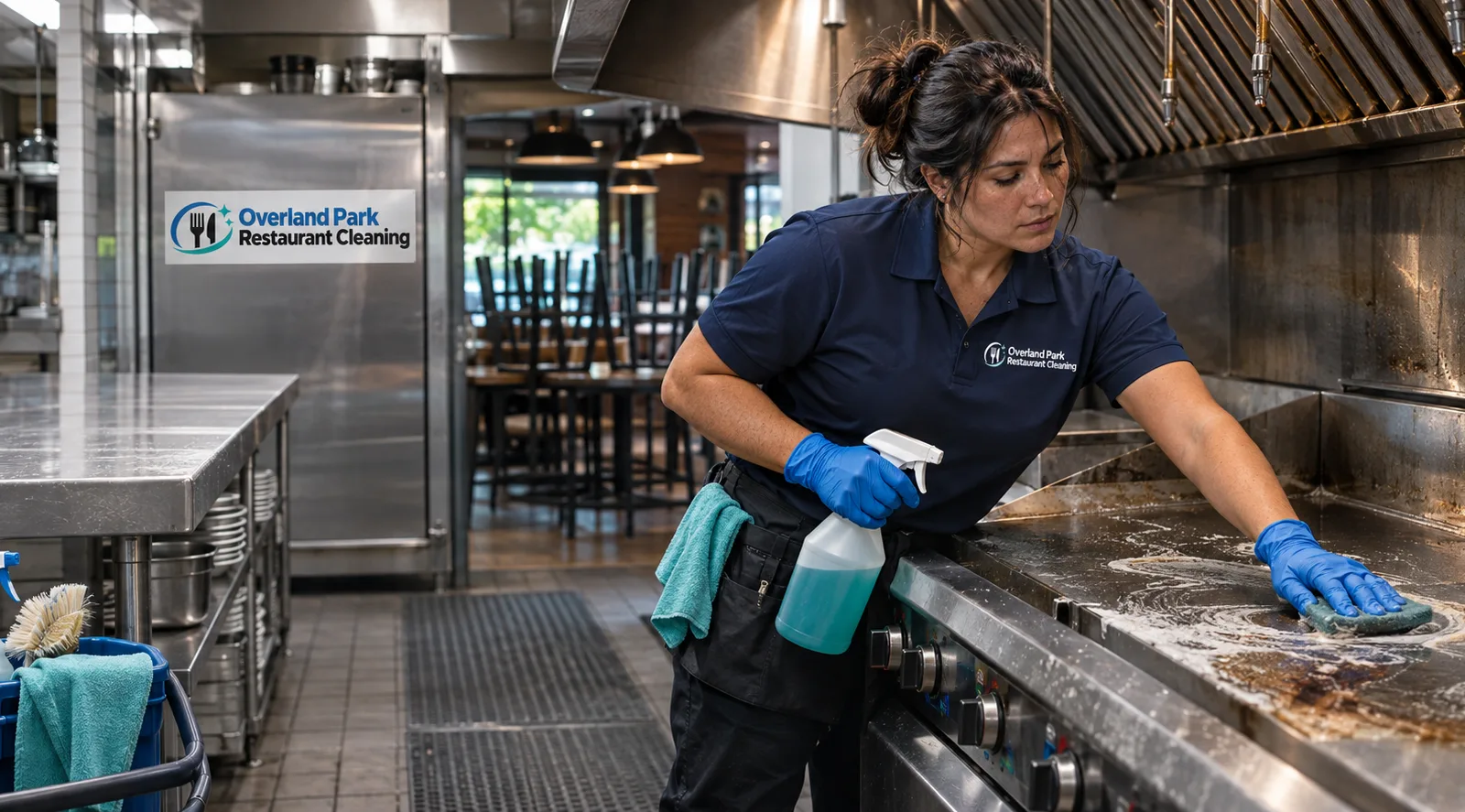
Degreasing focuses on accessible equipment exteriors, splash zones, control surrounds, fronts, sides, and the nearby floor. Heavy carbon deposits may need repeated treatment rather than excessive scraping.
Serving Overland Park, Kansas & surrounding areas
Open 24/7
Kitchen Cleaning · Overland Park
Detailed commercial cleaning built around your equipment, operating hours, food-safety procedures, and the condition of each work area.
Facility-Specific Care
Kitchen Cleaning Services address the grease, carbon, food residue, and soil that routine shift cleaning may leave in hard-to-reach areas. Overland Park Restaurant Cleaning handles planned deep cleaning for restaurant kitchens, commissaries, cafeterias, and other commercial food-preparation spaces.
The scope can cover cooking lines, equipment exteriors, floors, walls, shelving, sinks, prep areas, and accessible spaces behind or beneath movable units.
As a professional restaurant company in Overland Park, KS, we plan the work around how the kitchen operates rather than applying one standard checklist to every facility. A small café near Downtown Overland Park has different access and scheduling needs than a full-service restaurant along the Metcalf Avenue commercial corridor. Kitchens serving the Corporate Woods area may need work arranged outside weekday meal periods, while locations near Oak Park Mall may need cleaning coordinated around evening and weekend traffic.
Before work begins, we identify priority areas, access limits, sensitive surfaces, and equipment that requires special handling. The result is a written scope that helps managers understand what will be cleaned, what needs to be moved, and what should remain shut down until surfaces are dry and the kitchen is ready for use.
Scope of Work
A commercial kitchen deep cleaning plan should match the room, equipment, and buildup present. Cooking-line work may include degreasing accessible surfaces on ranges, fryers, flat-top griddles, ovens, salamanders, and surrounding stainless steel.
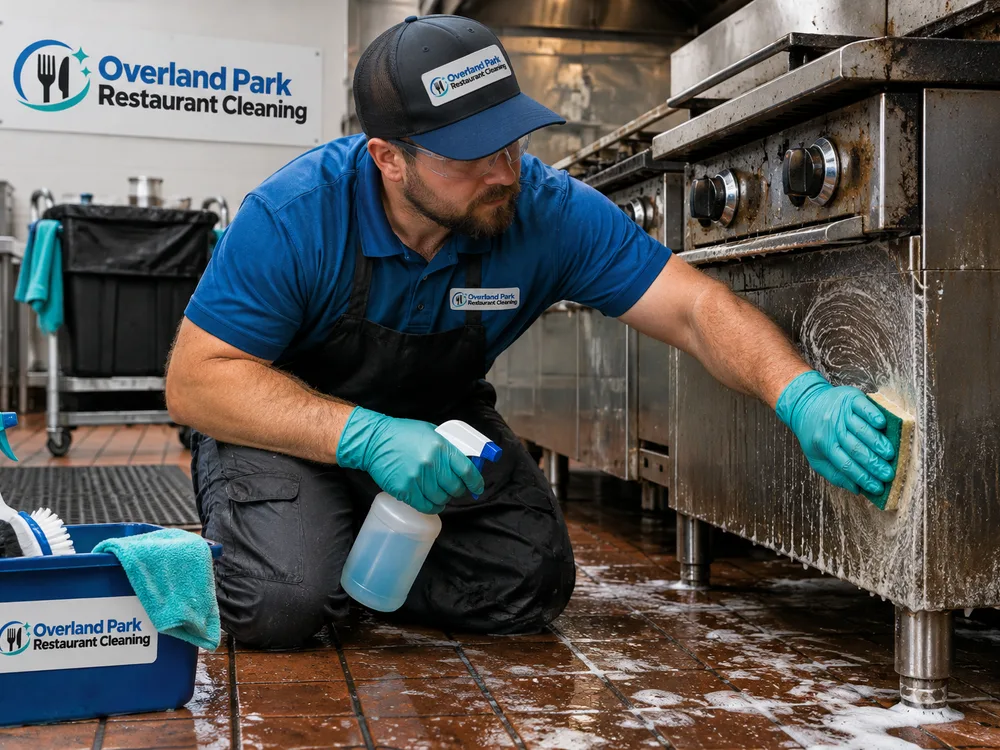
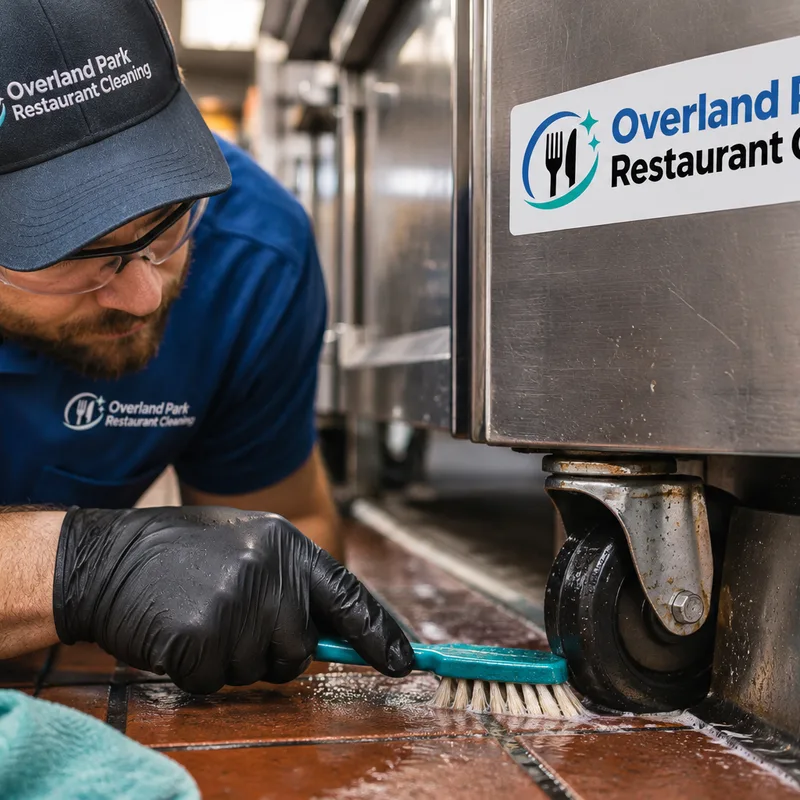
Kitchen equipment cleaning can also address exterior panels, legs, casters, handles, control surrounds, and the accessible floor beneath movable units. Manufacturer instructions and site procedures determine which products and methods are suitable.
Other common areas include backsplashes, washable walls, shelving, prep tables, sinks, floor edges, corners, grout lines, and floor-wall junctions. Degreaser dwell time helps loosen fatty soil before agitation and rinsing. Scrapers must be appropriate for the surface, since an aggressive blade or abrasive pad can damage stainless steel, coated panels, or glass.
Food-contact surfaces require products and procedures suited to that use, followed by any required rinse or sanitizing step.
Exhaust hoods, filters, ducts, fans, grease traps, and fire-suppression components may require separate qualified service. We identify exclusions before the job so restaurant managers can coordinate those systems with the proper provider.
Cleaning Specification
Degreasing focuses on accessible equipment exteriors, splash zones, control surrounds, fronts, sides, and the nearby floor. Heavy carbon deposits may need repeated treatment rather than excessive scraping.
Hot spots include fryer areas, floor-wall junctions, corners, grout lines, and spaces beneath movable equipment. The method is selected for the flooring material and its condition.
Prep tables, shelving, sinks, washable walls, and storage surfaces are cleaned with attention to food-contact requirements and cross-contamination controls.
Ovens, ranges, griddles, fryers, refrigeration exteriors, and small appliance surfaces can be included when access and manufacturer guidance allow.
Handles, knobs, casters, legs, ledges, kick plates, and narrow gaps often collect residue even when broad surfaces receive regular shift cleaning.
Dishwashing zones, utility sinks, racks, and washable surfaces can be added to create a coordinated scope for the wider kitchen work area.
Cleaning Process
Step 1 of 5
We review the layout, equipment, soil level, surface materials, access, operating schedule, and any areas that staff or another contractor will handle.
Step 2 of 5
The written plan identifies included surfaces, exclusions, equipment movement, utility or shutdown needs, expected timing, and preparation required before arrival.
Step 3 of 5
Food, utensils, packaging, and loose items must be removed or protected. The crew confirms that equipment is cool, safe to approach, and ready for the agreed work.
Step 4 of 5
The team applies surface-appropriate products, allows suitable dwell time, agitates buildup, and cleans accessible components in an orderly sequence. Clean tools are kept separate from tools used on heavily soiled floors.
Step 5 of 5
We inspect the included areas with the site contact, note anything that could not be accessed safely, and discuss practical intervals for future professional kitchen cleaning.
Scheduled Detail Work
Daily closing routines remain the first line of kitchen care, but they usually focus on surfaces needed for the next shift. Periodic deep cleaning reaches edges, equipment surrounds, and buildup zones that take more time, access, or specialized degreasing.
A documented schedule also gives managers a clear way to assign work between employees, cleaning crews, equipment technicians, and exhaust-system contractors.
Seasonal temperature changes in the Kansas City area can affect scheduling. During hot weather, kitchens may already carry a heavy cooling load, so cleaning is often more practical after equipment has been shut down and cooled. In winter, adequate drying time matters around entrances and service doors because tracked moisture can add to slip concerns.
These conditions do not change the fundamentals of restaurant kitchen cleaning, but they do influence start times, ventilation, and reopening plans.
A dependable kitchen cleaning company should also respect equipment boundaries. Electrical controls should not be flooded, gas components should not be disturbed without authorization, and fixed equipment should not be pulled out casually. Clear limits protect the facility and keep the cleaning scope separate from repair, fire-suppression, and code-inspection work.
Pricing Factors
Commercial kitchen cleaning in Overland Park typically costs about $500 to $1,500 for a focused deep clean, while large kitchens or heavy grease conditions can cost $2,000 or more. Smaller work limited to selected equipment or one preparation area may cost less.
Final pricing depends on kitchen size, soil and carbon buildup, equipment quantity, access, surface materials, required equipment movement, and whether work must occur overnight. Exhaust-system or grease-trap service is generally priced separately. The exact cost is confirmed after a walkthrough or detailed scope review.
Set the scope before the next cleaning window so equipment shutdowns, staff preparation, access, and drying time can be planned around service.
Call for a Free QuoteFrequently Asked Questions
A focused equipment or work-area cleaning may take several hours, while a full commercial kitchen deep cleaning can require an overnight window or more than one visit. Kitchen size, grease level, equipment access, and cooling time affect the schedule. Restaurants along busy Overland Park commercial corridors often arrange the work after closing or on a low-volume day.
The included work area generally needs to be out of production while deep cleaning is underway. Cooking equipment must cool, food and utensils must be protected or removed, and cleaned surfaces need enough time to dry. Some facilities can isolate one zone, but that decision depends on the layout and the risk of chemicals or soil reaching active food-preparation areas.
Staff should remove exposed food, utensils, disposable packaging, floor mats, and loose items from the agreed work area. Equipment should be shut down and cooled according to manufacturer and facility procedures. The site contact should also arrange keys, alarm access, loading access, and any authorization needed to move equipment.
Yes, when the cleaner follows manufacturer guidance, selects products for the surface, and keeps moisture away from sensitive electrical or gas components. Stainless steel, coated panels, glass, stone, and resilient flooring do not all tolerate the same chemicals or abrasives. Existing corrosion, loose seals, failed caulk, or damaged finishes should be documented before work begins.
Hood plenums, ducts, fans, fire-suppression components, and other exhaust-system interiors are usually outside a general kitchen-cleaning scope and may require a qualified specialist. Accessible hood exteriors or removable filters may be addressed only when specifically agreed. The written scope should state the boundary clearly before service.
The right interval depends on cooking volume, menu, equipment, grease production, and the effectiveness of daily cleaning. A high-output fryer line usually needs more frequent attention than a light-use preparation kitchen. Managers should use visible soil, facility procedures, equipment guidance, and applicable Johnson County food-safety requirements to set the schedule.
After-hours scheduling may be available when arranged in advance and when the facility can provide safe access. Restaurants near Metcalf Avenue, Downtown Overland Park, and Oak Park Mall often benefit from avoiding meal periods and customer traffic. The schedule should include equipment cooling, crew access, drying, and reopening time.
An accurate quote requires the kitchen dimensions or general size, equipment list, photos or a walkthrough, current soil condition, access details, preferred cleaning window, and the specific surfaces to include. Note any fixed equipment, sensitive finishes, parking or loading restrictions, and areas handled by other contractors. These details allow the scope and price to reflect the actual work.
Plan Your Cleaning Scope
Tell us about your restaurant, schedule, and priority areas so we can discuss a practical cleaning scope.
Request a Quote
After you submit the form, our team will review your details and contact you to discuss the next step.