Commercial Degreasing
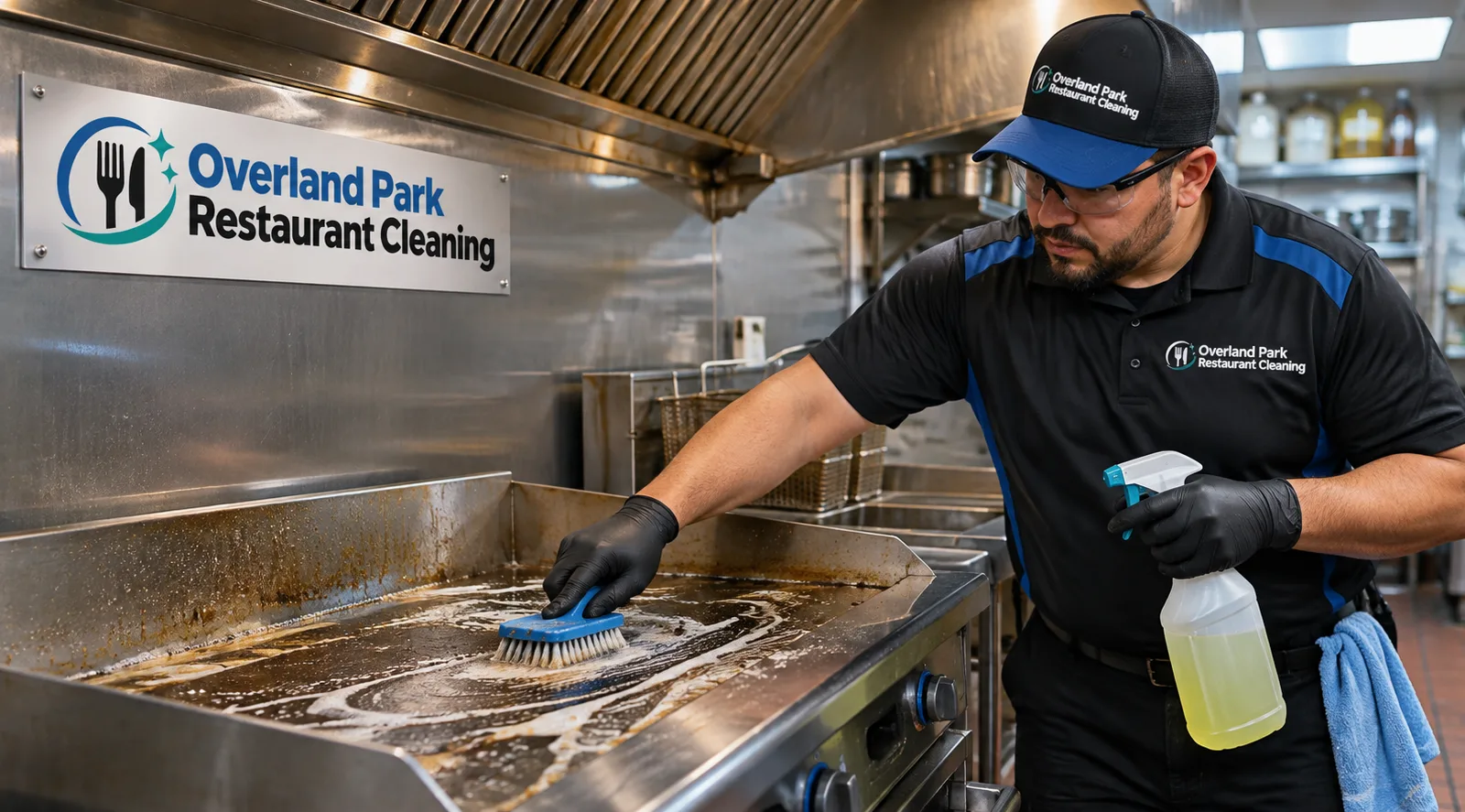
An appropriate degreaser is given the necessary dwell time to loosen fats before agitation and removal. Product strength and contact time are adjusted for the surface, soil load, and manufacturer guidance.
Serving Overland Park, Kansas & surrounding areas
Open 24/7
Kitchen Deep Cleaning · Olathe
Remove cooked-on grease, food residue, and floor buildup with a detailed cleaning plan built around your equipment, surfaces, and operating schedule.
Facility-Specific Care
Restaurant Kitchen Deep Cleaning Olathe service addresses the residue that routine closing work cannot fully remove. Grease settles on equipment sides, utility lines, walls, shelving, casters, and the floor beneath the cook line. Over time, these deposits hold soil, create odors, and make daily cleaning harder.
Overland Park Restaurant Cleaning develops the scope around the kitchen rather than applying the same checklist to every property. We look at cooking volume, equipment placement, floor material, drainage, access, and the condition of the buildup. Our restaurant specialists serving Overland Park, KS work with operators in nearby Olathe who need practical scheduling and clear expectations before the crew arrives.
The goal is a cleaner, more manageable workspace. A deep clean can reset neglected areas, support an upcoming inspection, prepare a kitchen for new management, or establish a better baseline for recurring maintenance. It does not replace the restaurant's daily sanitation procedures or required pest-control and hood-system services. Instead, it tackles accessible surfaces and difficult buildup with methods suited to a commercial food-preparation environment.
Scope of Work
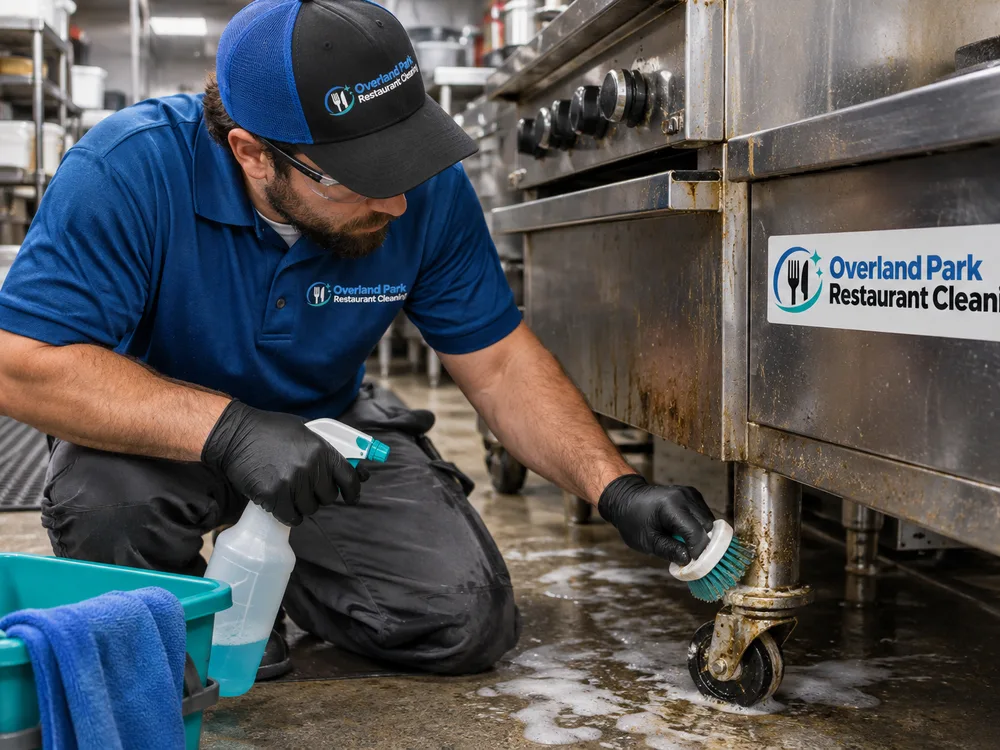
A written scope may include the exteriors, sides, legs, and accessible undersides of fryers, ranges, ovens, prep tables, refrigerators, and other commercial equipment. Crews can clean stainless steel surfaces, backsplashes, washable walls, shelving, kick plates, baseboards, doors, handles, utility areas, and reachable pipes or conduit. Detail work around casters and equipment feet removes deposits that ordinary mopping leaves behind.
Moveable equipment may be shifted when access, utility connections, weight, and manufacturer requirements allow it. Gas appliances should not be disconnected casually, and fixed equipment cannot always be moved. Those limits are identified during the walkthrough so the scope distinguishes accessible cleaning from work that requires an equipment technician.
Exhaust hoods, ducts, and fans involve specialized fire-safety cleaning and should be handled under an appropriate hood-cleaning scope. Interior appliance cleaning and food-contact surface treatment also need to be confirmed in advance. Clear boundaries protect equipment and give restaurant managers an accurate plan for reopening the kitchen.
Cleaning Specification
An appropriate degreaser is given the necessary dwell time to loosen fats before agitation and removal. Product strength and contact time are adjusted for the surface, soil load, and manufacturer guidance.
Pads, brushes, scrapers, and detail tools help release adhered residue. Tool choice matters because aggressive abrasives can scratch stainless steel or damage coatings.
Where suitable, heat can help break down greasy deposits in tight areas. Moisture is controlled around electrical components, outlets, pilot assemblies, and sensitive equipment.
Loosened soil and cleaning chemistry must be removed rather than spread across adjacent surfaces. Crews manage rinse water carefully and keep waste out of food-preparation zones.
Handles, switches, door edges, kick plates, and equipment controls collect frequent contact soil. Cleaning follows equipment instructions and avoids forcing liquid into control panels.
The completed areas are reviewed against the agreed scope. Any permanent staining, worn finishes, damaged grout, or inaccessible deposits are identified for the manager.
Commercial Floor Care
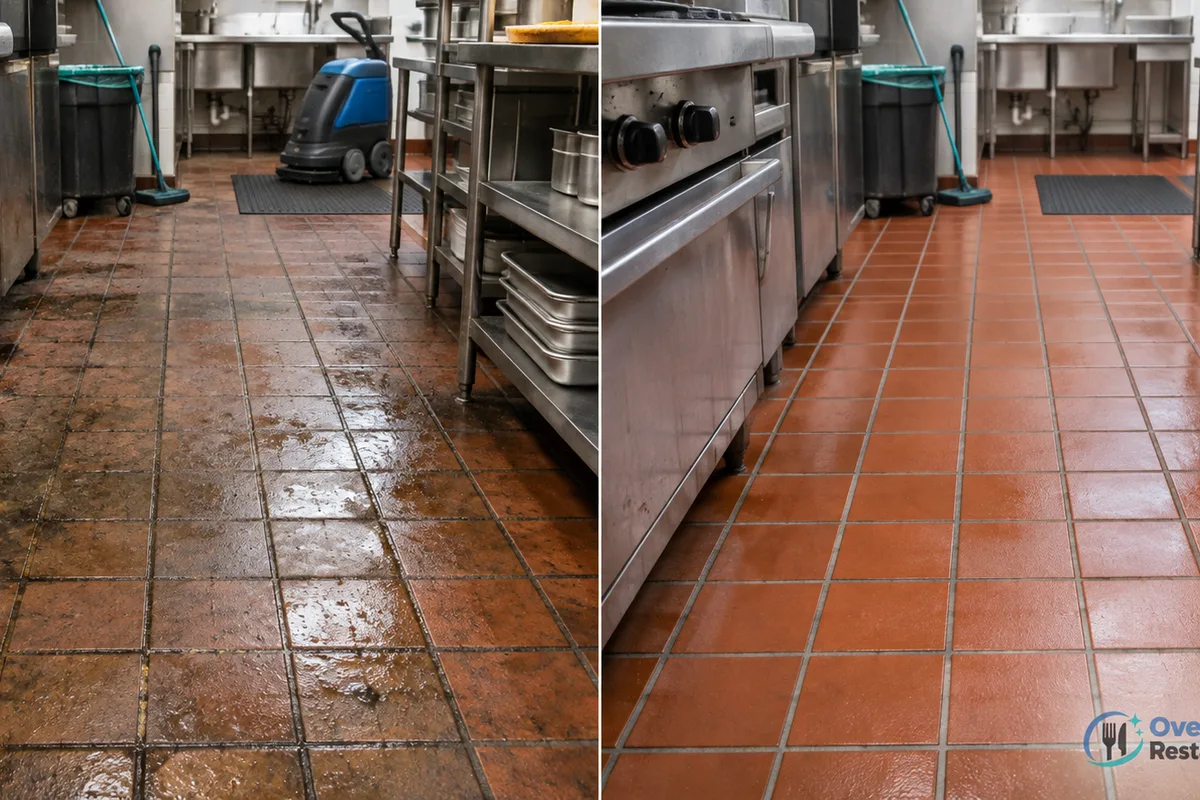
Restaurant Floor Cleaning Olathe work begins with identifying the flooring and the type of buildup. Quarry tile and commercial ceramic tile often collect greasy soil in textured surfaces and grout lines. Sealed concrete, resilient flooring, and kitchen mats need different chemistry and agitation. A product or brush that works on quarry tile may be unsuitable for another finish.
After loose debris is removed, a compatible cleaner is applied and allowed to dwell. Mechanical scrubbing or focused hand agitation breaks up embedded grease, especially along the cook line, beneath accessible equipment, at wall edges, and around drains. The slurry is then extracted or picked up, followed by controlled rinsing. Floors should be left free of excess residue because cleaner residue can attract fresh soil and contribute to slippery conditions.
Floor drains receive careful treatment, but cleaning does not correct a damaged drain, blocked line, failed grout joint, or improper floor slope. Those conditions are reported so the operator can arrange the right repair. During periods of Kansas rain, snow, or deicing salt, entry areas can also track additional grit toward service corridors. Separating front-entry soil from kitchen grease helps prevent cross-contamination of tools and cleaning solutions.
Cleaning Process
Step 1 of 5
We review the cook line, prep areas, floors, drains, equipment access, utility connections, and any time-sensitive concerns. The walkthrough also identifies surfaces that require testing or special handling.
Step 2 of 5
You receive a clear description of included areas, access limits, preparation responsibilities, and expected working time. Many kitchens schedule deep cleaning after closing or during a planned shutdown so surfaces can be cleared and equipment can cool.
Step 3 of 5
Restaurant staff remove or secure food, utensils, small appliances, and movable supplies as agreed. The crew protects sensitive controls, separates tools by work area, and places wet-floor controls where needed.
Step 4 of 5
Work generally moves from higher surfaces toward lower ones so loosened soil does not contaminate completed areas. Equipment exteriors and surrounding surfaces are detailed before the final floor scrub and extraction.
Step 5 of 5
The manager reviews the completed scope and any limitations. Surfaces are allowed to dry, and restaurant staff complete any required sanitizing, equipment checks, or food-area setup before production resumes.
Scheduling Fit
A good cleaning plan accounts for customer traffic, delivery windows, employee access, equipment cooldown, and the time required for floors to dry. Restaurants near the commercial corridors around Interstate 35 may have early deliveries or late service, while businesses serving the downtown Olathe area may have tighter loading and access arrangements. These operational details affect crew arrival, staging, and waste removal more than the restaurant's distance from our Overland Park base.
Before service, food and single-use supplies should be removed from exposed areas or sealed as directed. Hot equipment needs adequate cooldown time. Managers should identify controls that staff must operate, appliances that cannot be moved, known leaks, damaged electrical covers, and floor areas with recurring drainage trouble. If pest activity, sewage backup, fire damage, mold, or hazardous materials are present, those conditions require separate assessment and may fall outside routine kitchen deep cleaning.
We can build the work around a one-time reset, a turnover, or planned periodic maintenance. Frequency depends on menu, cooking methods, volume, equipment layout, and the restaurant's own daily cleaning program. Frying and high-volume production can create a different grease load than a kitchen focused on cold preparation. The schedule should follow observed conditions rather than an arbitrary interval.
Pricing Factors
Restaurant kitchen deep cleaning in Olathe typically ranges from about $700 to $2,500 for a defined one-time project, while large kitchens or severe grease buildup may cost more. A smaller floor-focused job may fall below that range.
Final pricing depends on kitchen size, soil level, equipment access, floor type, grout condition, requested appliance interiors, and after-hours scheduling. Moving equipment, extended scraping, and repeated degreasing add labor. These are general, nonbinding estimates; the exact cost is confirmed after a walkthrough or detailed scope review.
Frequently Asked Questions
A defined deep clean often requires one overnight work period, but the actual time depends on kitchen size, grease load, access, and floor condition. Large cook lines, tightly placed equipment, and extensive hand scraping extend the schedule. The work window is confirmed after the kitchen walkthrough.
Yes, after-hours scheduling can often reduce disruption and give cooking equipment time to cool. The plan must still allow enough time for cleaning, floor drying, manager review, and any required staff sanitizing before food preparation resumes.
Moveable equipment can be shifted only when it is safe, authorized, and compatible with utility connections and manufacturer instructions. Fixed, very heavy, or hard-connected equipment may require a qualified technician. The Olathe walkthrough identifies what can be accessed without risking damage or an unsafe reconnection.
Deep cleaning removes cleanable soil, but it cannot guarantee removal of permanent stains, carbonized deposits, corrosion, etched surfaces, or discoloration absorbed into damaged grout. Missing grout, cracked tile, and failed coatings require repair rather than stronger cleaning chemistry.
Cleaning and sanitizing are separate steps, so sanitizing is included only when it is specified in the scope with a suitable product and procedure. Food establishments should continue following their own sanitation plan and applicable Johnson County requirements for food-contact areas.
Staff generally need to remove exposed food, utensils, paper goods, and small countertop equipment from the work zone. They should also empty designated shelving, identify sensitive equipment, and cool the cook line before the scheduled start. Exact preparation duties are provided with the scope.
The right frequency is based on observed buildup, cooking volume, menu, ventilation performance, floor texture, and the effectiveness of daily cleaning. A high-grease cook line may need focused detail work more often than a low-grease prep kitchen. A walkthrough can establish a practical maintenance interval.
Plan Your Cleaning Scope
Tell us about your restaurant, schedule, and priority areas so we can discuss a practical cleaning scope.
Request a Quote
After you submit the form, our team will review your details and contact you to discuss the next step.