Kitchen Deep Cleaning
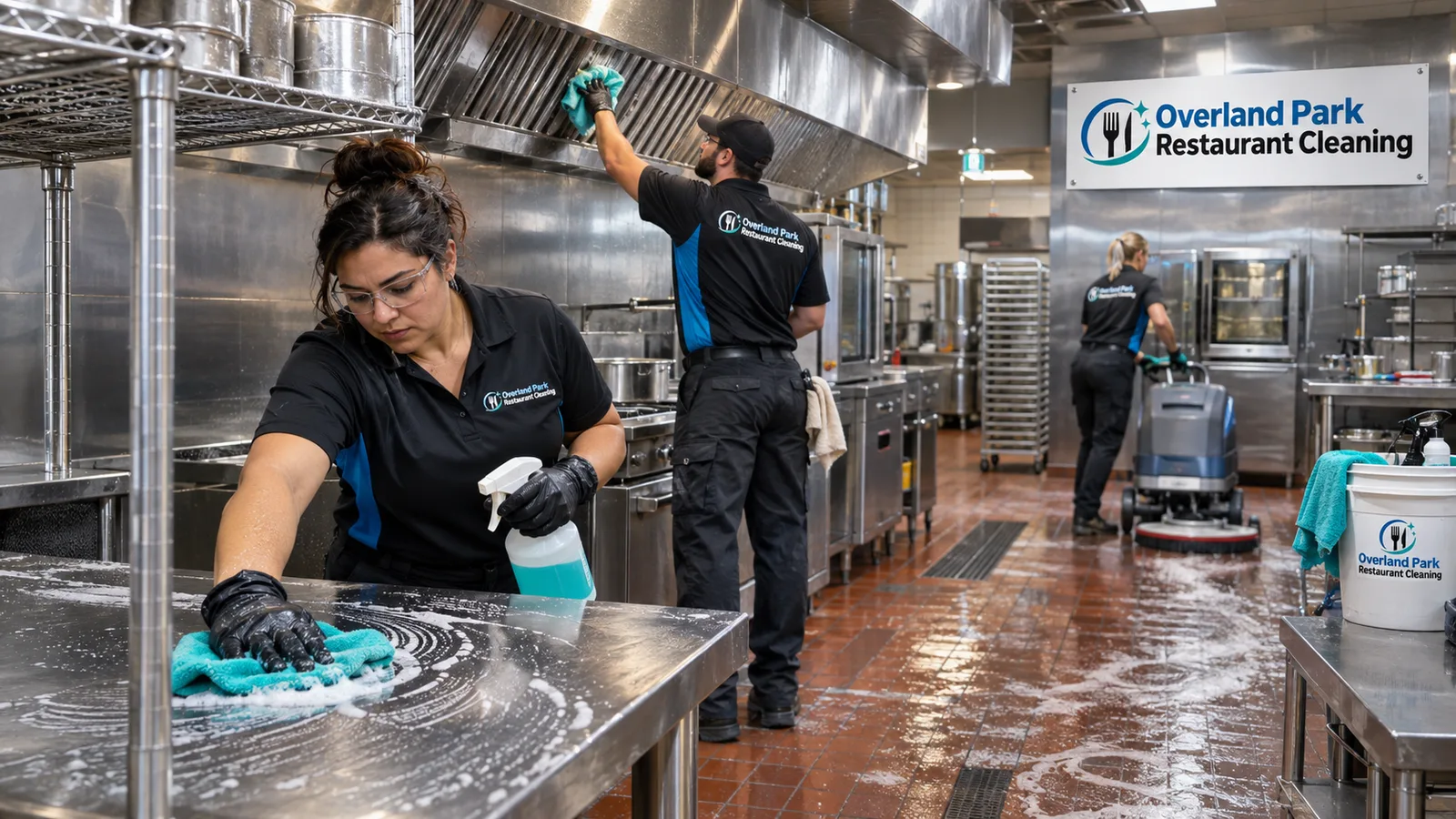
Degreasing and detailed cleaning can cover floors, walls, washable ceilings, prep surfaces, shelving, equipment exteriors, kick plates, casters, and accessible areas behind or beneath equipment.
Serving Overland Park, Kansas & surrounding areas
Open 24/7
Restaurant Cleaning · Overland Park
Detailed cleaning for commercial kitchens, walk-in coolers, dining areas, and hard-to-reach surfaces, scheduled around your operating hours.
Facility-Specific Care
A restaurant cleaning company should do more than make visible surfaces look presentable. Grease migrates behind equipment, food debris collects along edges, and airborne residue settles on vents, pipes, and other high surfaces. Overland Park Restaurant Cleaning develops a defined scope for those areas, with tasks assigned by room, surface, and cleaning method.
We plan each project around the facility’s layout, equipment, operating schedule, and access requirements, with Overland Park's local restaurant service completing a full restaurant deep clean during a planned closure or dividing the work into overnight visits. Restaurants near the retail and dining activity around Oak Park Mall may need tight scheduling between closing and morning preparation. Businesses around Corporate Woods may have service windows shaped by weekday office traffic and catered events. Downtown Overland Park locations can present smaller kitchens, tighter storage, and limited room for staging equipment.
Before work begins, we clarify what is included, which equipment can be moved, who is responsible for disconnecting appliances, and whether any areas must remain available. The resulting plan gives managers a practical checklist rather than a vague promise to clean thoroughly.
Scope of Work
Degreasing and detailed cleaning can cover floors, walls, washable ceilings, prep surfaces, shelving, equipment exteriors, kick plates, casters, and accessible areas behind or beneath equipment.
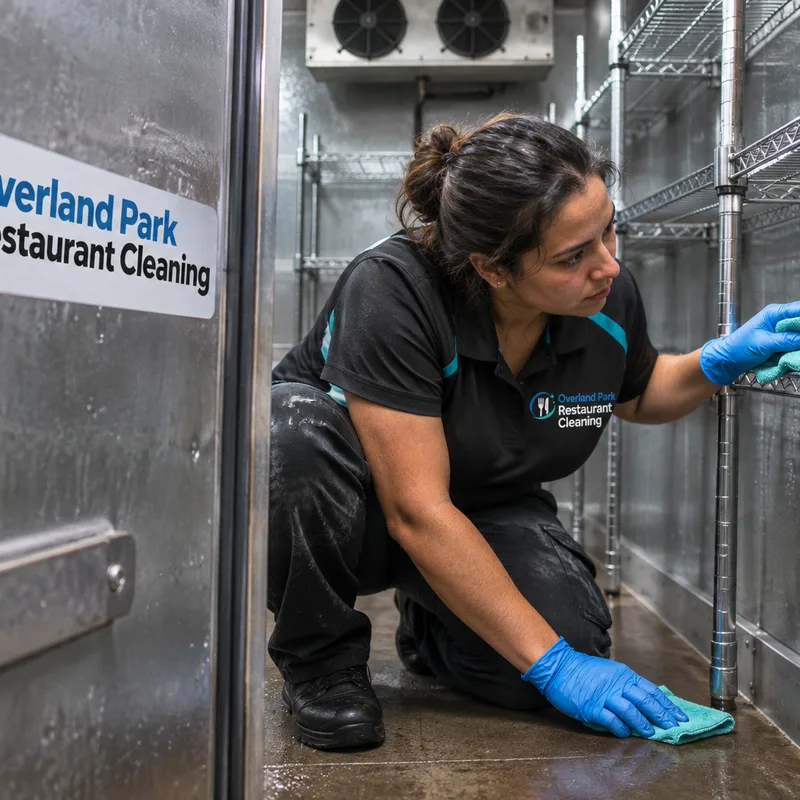
Walk-in cooler cleaning addresses racks, walls, doors, handles, gaskets, fan guards where safely accessible, and floors after food has been removed or protected by restaurant staff.
High dusting removes buildup from accessible pipes, ledges, vents, light surrounds, ceiling fans, and structural surfaces using suitable extension tools or access equipment.
Detailed service can include table bases, chair legs, booths, partitions, baseboards, window ledges, doors, and other touchpoints that routine front-of-house cleaning may miss.
Fixtures, partitions, wall surfaces, floors, lockers, break areas, and touchpoints receive task-specific cleaning based on condition and approved surface products.
Edges, grout lines, corners, floor drains, and areas beneath movable items are addressed with methods appropriate for tile, sealed concrete, resilient flooring, or other installed materials.
Kitchen Cleaning Specification
Commercial kitchen deep cleaning starts with soil identification. Carbonized residue on cooking equipment requires a different product and dwell time than greasy film on walls. Food-contact surfaces require products and procedures appropriate to those surfaces, followed by rinsing or sanitizing when the product label calls for it. Chemicals are never mixed, and Safety Data Sheets should be available for the products used.
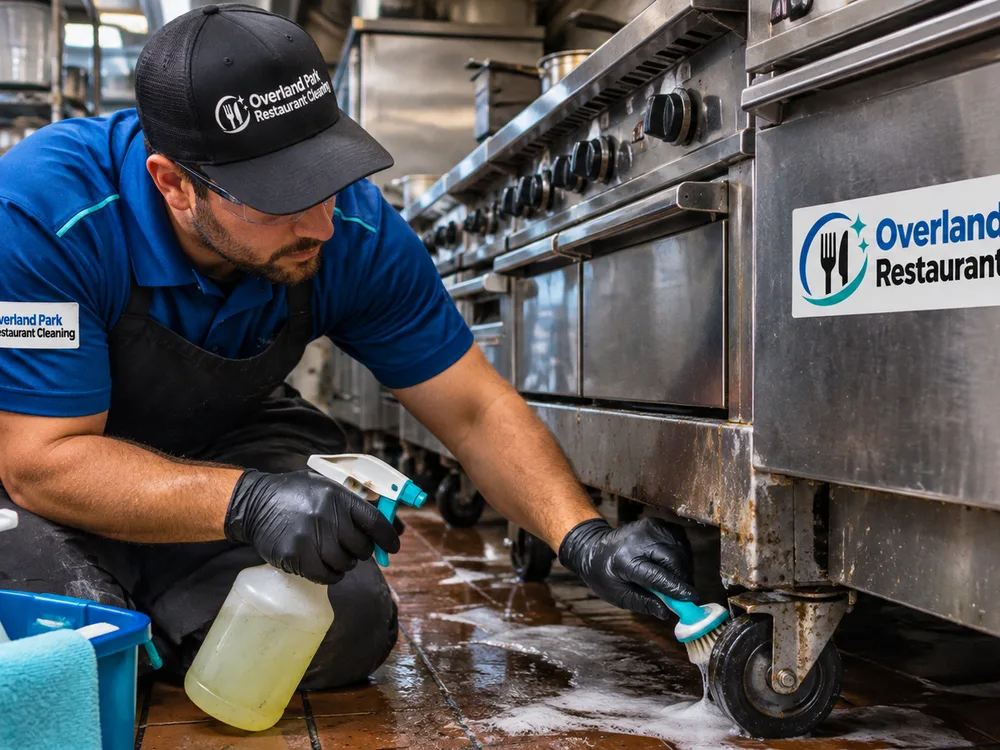
The cleaning scope may include accessible equipment sides, backs, legs, casters, utility lines, walls, floors, floor drains, shelving, and exterior panels. Heavy equipment is moved only when it can be handled safely and the restaurant has approved the work. Gas, electrical, refrigeration, and fire-suppression components are not disconnected or serviced as part of general cleaning.
Kitchen exhaust hoods and ducts require specialized cleaning and documentation under applicable fire-safety requirements. A detailed kitchen clean may address accessible exterior surfaces, but it should not be represented as certified exhaust-system cleaning unless that work is specifically included and performed by a qualified provider. This distinction protects the restaurant and keeps the scope clear.
Cleaning Process
Step 1 of 5
We review the kitchen, coolers, storage rooms, dining area, restrooms, and accessible high surfaces. Managers can identify problem areas, operational restrictions, and equipment that must stay in place.
Step 2 of 5
The proposal identifies included rooms and tasks, exclusions, access needs, and the expected service window. Photos or task lists may be used to document areas that need special attention.
Step 3 of 5
Restaurant staff remove or secure food, utensils, small appliances, and sensitive items as agreed. Our crew stages tools and chemicals while protecting surfaces that are outside the cleaning scope.
Step 4 of 5
Crews generally work from higher surfaces toward lower ones and from drier tasks toward wet cleaning. Degreasers receive proper dwell time, separate tools help limit cross-contamination, and food-contact surfaces receive the required finishing steps.
Step 5 of 5
The completed work is checked against the written scope. Any access limitation, damaged surface, or area that could not be cleaned safely is reported to the restaurant contact.
Detailed Facility Care
Walk-in cooler cleaning requires preparation. Restaurant staff typically remove, consolidate, or protect food before service. The crew then cleans accessible shelving, wall panels, doors, handles, gaskets, floors, and corners. Ice buildup, damaged seals, active leaks, mold inside building materials, and mechanical refrigeration problems require correction beyond ordinary cleaning.
High dusting in Overland Park restaurants is especially useful where open ceilings, exposed pipes, beams, vents, or ledges sit over work and guest areas. Dust and greasy residue can settle onto these surfaces over time. The team evaluates safe access before using extension poles or access equipment, and nearby food and preparation areas are protected before debris is disturbed.
Restaurant detailed cleaning also reaches low and hidden areas. Table bases, booth edges, baseboards, door tracks, shelving uprights, equipment legs, and floor-wall junctions often need hand work. Overland Park's hot summers and cold winters can increase tracked-in soil as guests and delivery crews move through wet or treated parking areas, so entrances and kitchen traffic paths may need extra attention during seasonal weather.
Clear Cleaning Scope
The best cleaning plan matches the restaurant instead of relying on a generic task list. A quick-service kitchen with continuous fryer use has different grease loading than a bakery, bar, café, or full-service dining room. Surface materials also matter. Stainless steel, quarry tile, epoxy flooring, painted walls, rubber gaskets, and acrylic panels do not all tolerate the same chemistry or agitation.
Frequency depends on use and condition. Some operators schedule professional restaurant deep cleaning before inspections, after construction or equipment changes, during menu transitions, or ahead of a reopening. Others use recurring detailed service to keep buildup from reaching the point where a long shutdown is needed. Recurring work can rotate priorities, such as one visit for cook-line details and another for high surfaces, storage, and front-of-house fixtures.
We do not promise that cleaning will repair failed grout, corroded metal, damaged coatings, stained ceiling tiles, or worn flooring. Those conditions may become more visible once soil is removed. Clear reporting helps the operator separate cleanable buildup from maintenance and repair needs.
Describe the areas causing concern, your operating hours, and any deadline. We will help define a practical cleaning scope before the work is scheduled.
Call for a Free QuoteFrequently Asked Questions
Restaurant deep cleaning is priced from the facility's size, condition, scope, access, and required labor rather than a single flat rate. A small targeted job costs less than a full kitchen, dining room, cooler, restroom, and high-dusting service. Heavy grease, crowded storage, overnight scheduling, equipment movement, and limited access can increase labor. An on-site review is the most reliable way to confirm the exact price and included tasks.
A targeted area may be completed within one service window, while a full restaurant can require a longer closure or several scheduled visits. The timeline depends on square footage, grease accumulation, cooler preparation, equipment access, and how much work can occur while operations are paused. Restaurants around busy Overland Park retail corridors often choose overnight or planned-closure scheduling to reduce interference with service.
Yes, overnight scheduling may be available when the scope, building access, security procedures, and completion deadline are agreed upon in advance. The restaurant should also identify alarm instructions, restricted rooms, key control, and the manager authorized to approve the finished work. Scheduling depends on crew availability and the amount of cleaning requested.
Restaurant staff should remove, consolidate, or securely protect food and provide clear access to the surfaces included in the scope. Shelving may need to be emptied if its full surface is to be cleaned. Staff should also report leaks, unstable racks, damaged gaskets, or refrigeration concerns before work starts.
Light, movable items may be repositioned when the floor is level, utilities allow it, and the move can be completed safely. Heavy or connected equipment requires advance approval and may need a qualified technician to disconnect it. The written scope should identify what will be moved and which areas will be cleaned only where accessible.
High dusting can be completed safely when access is assessed, food and utensils are removed or protected, and the area is kept clear during work. Extension tools or suitable access equipment are selected for the height and layout. Open ceilings and exposed utilities require careful planning because some components may be fragile, energized, or unsuitable for wet cleaning.
General kitchen cleaning does not automatically include certified exhaust hood, fan, and duct cleaning. Accessible exterior surfaces may be included, but the full grease-exhaust system is specialized work governed by fire-safety requirements and should be identified separately in the proposal. Managers should verify the exact scope and any required service documentation before scheduling.
Plan Your Cleaning Scope
Tell us about your restaurant, schedule, and priority areas so we can discuss a practical cleaning scope.
Request a Quote
After you submit the form, our team will review your details and contact you to discuss the next step.