Dining Areas
Tables, chair backs, booths, ledges, floors, trash receptacles, and visible touchpoints are cleaned according to the agreed nightly checklist.
Serving Overland Park, Kansas & surrounding areas
Open 24/7
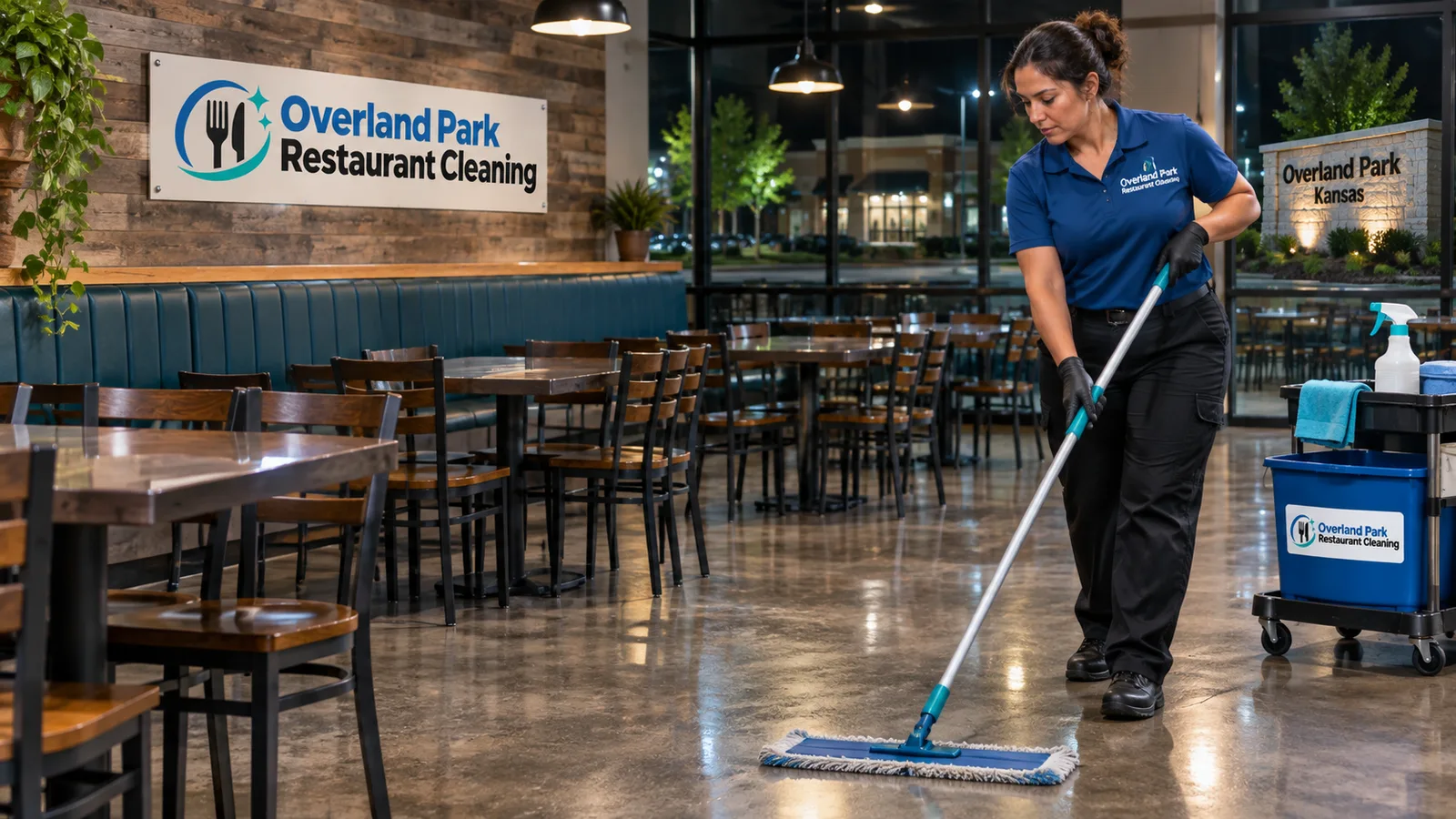
Restaurant Night Cleaning · Overland Park
Walk into a clean restaurant each morning with recurring overnight service built around your closing routine, floor plan, and operating schedule.
Recurring Overnight Service
Restaurant Night Cleaning gives managers a practical way to reset dining rooms, kitchens, service areas, and restrooms without disrupting guests or staff. Overland Park Restaurant Cleaning schedules the work after closing and completes an agreed checklist before the next shift arrives.
We are an experienced restaurant team in Overland Park, KS that builds each recurring plan around the restaurant's layout, service style, closing time, and busiest days. A quick-service counter needs a different routine than a full-service dining room, bar, or private event space. The scope can also account for patios during warm weather, entry mats during wet or snowy conditions, and higher floor-care needs near exterior doors.
Consistency matters more than a one-time deep clean. Recurring Restaurant Cleaning establishes clear tasks, service frequency, and quality checks so managers know what is covered. If priorities change because of a new menu, altered hours, seasonal traffic, or an event schedule, the cleaning plan can be reviewed and updated.
Scope of Work
A complete nightly scope starts with the areas guests and employees use every day. Dining-room work may include wiping tables and chairs, cleaning booths, removing trash, spot-cleaning glass, dusting accessible surfaces, vacuuming carpet, and mopping hard floors. Entry areas receive added attention because Kansas rain, winter moisture, grit, and deicing residue can quickly mark floors and mats.
Back-of-house Restaurant Janitorial Cleaning may cover floors, sinks, exterior equipment surfaces, washable wall areas, employee spaces, and waste stations. The exact scope should distinguish routine janitorial work from specialized hood, duct, grease-trap, pest-control, and equipment-maintenance services. Those jobs require separate methods or qualified vendors and should never be assumed to be part of a standard nightly checklist.
Cleaning also needs to follow the correct order. Crews generally remove debris first, clean surfaces, apply suitable disinfectants where specified, observe label contact times, and finish floors after higher surfaces. Color-coded microfiber cloths and dedicated restroom tools help reduce cross-contamination between guest areas, restrooms, and food-service spaces.
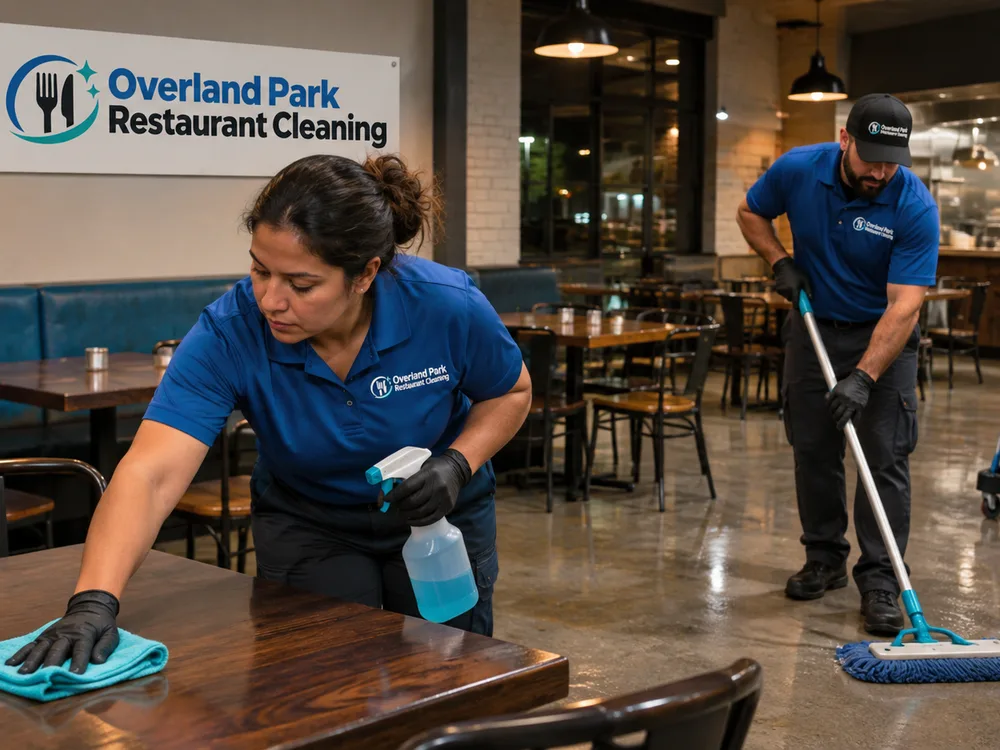
Nightly Cleaning Specification
Tables, chair backs, booths, ledges, floors, trash receptacles, and visible touchpoints are cleaned according to the agreed nightly checklist.
Loose soil and food debris are removed before the floor is cleaned with products suited to the surface and the restaurant's written scope.
Door glass, mats, host areas, and heavily traveled routes receive focused attention because tracked-in moisture and grit collect quickly.
Interior bins are emptied, liners are replaced, and accessible waste areas are cleaned to control spills, residue, and odors.
Break areas, staff restrooms, and other included spaces can be added to the recurring plan rather than handled as occasional extras.
Baseboards, lower wall areas, chair legs, vents, corners, and other detail tasks can rotate through a weekly or periodic schedule.
Restroom Cleaning
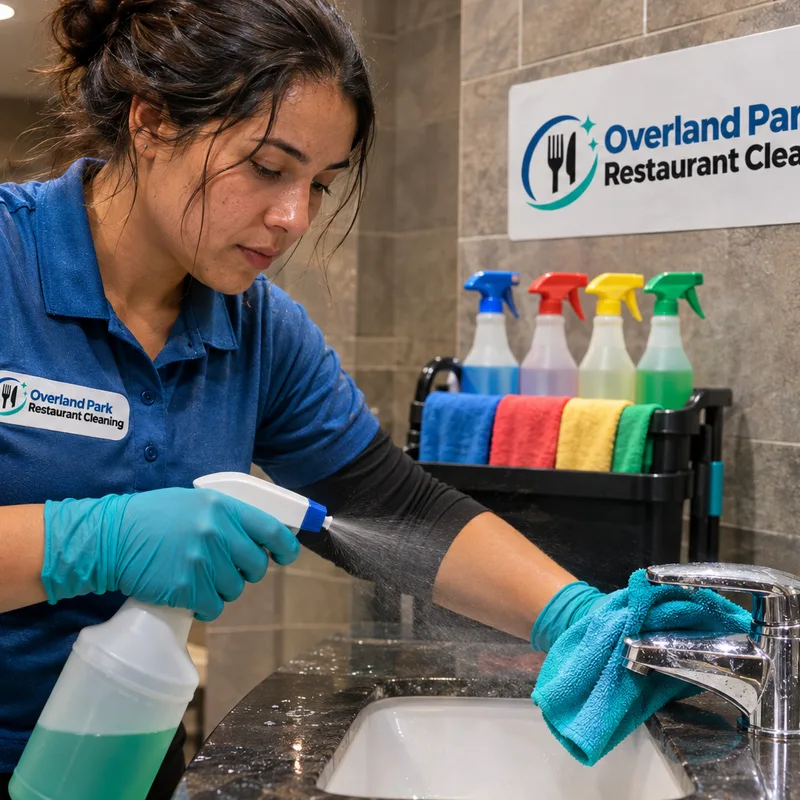
Restaurant Restroom Cleaning should address fixtures, mirrors, partitions, dispensers, touchpoints, floors, waste bins, and visible soil around toilets and urinals. Cleaning and disinfecting are separate steps: soil must be removed before a disinfectant can work as directed, and the product must remain wet for its labeled contact time.
Restrooms also need tools that stay out of kitchens and dining areas. Dedicated cloths, mop heads, gloves, and containers help keep the workflow separated. Supplies such as soap, paper goods, and liners can be checked during service when stocking responsibilities are included in the agreement.
A nightly reset does not replace checks during operating hours, especially at busy restaurants. It does give the opening team a clean baseline. Managers can then use daytime inspections to address guest traffic, spills, and restocking needs as they occur.
Service Setup
Step 1 of 5
We review entrances, dining areas, restrooms, service stations, kitchen access, floor materials, waste procedures, alarm instructions, and the time available between closing and opening.
Step 2 of 5
The proposal identifies nightly duties, rotating detail work, excluded specialty services, service frequency, supply responsibilities, and any areas that require manager approval.
Step 3 of 5
Access instructions, keys or codes, lockup steps, lighting, and alarm procedures are documented so the crew can enter and leave according to the restaurant's rules.
Step 4 of 5
The crew follows the location-specific checklist on scheduled nights, with tasks sequenced to reduce cross-contamination and avoid re-soiling finished areas.
Step 5 of 5
Managers have a clear route for reporting concerns. The scope can be refined when operating hours, traffic patterns, floor conditions, or recurring problem areas change.
Written Scope and Oversight
A dependable Restaurant Janitorial Company should be willing to define the work in writing. Ask who supervises the crew, how missed tasks are reported, what happens when closing runs late, and whether the same checklist is used on every visit. Confirm that the company understands product labels, dilution requirements, dwell or contact times, and the need to keep restroom tools separate from food-service areas.
Access control deserves equal attention. Overnight crews may work while managers are off the property, so lockup instructions and alarm procedures need to be specific. The scope should also say who moves chairs, handles interior waste, replaces consumables, and reports maintenance concerns such as leaks or damaged dispensers.
Restaurant Janitorial Services in Overland Park should reflect the location rather than a generic list. Commercial areas around College Boulevard may require service windows coordinated with office-driven lunch and dinner traffic. Restaurants near Oak Park Mall can face retail traffic and extended seasonal hours. Downtown Overland Park restaurants may need plans that account for events, patios, and pedestrian traffic. These operating details affect timing, entry cleaning, and the amount of soil crews encounter.
Pricing Factors
Recurring restaurant night cleaning in Overland Park typically ranges from about $0.10 to $0.30 per square foot per visit, while small locations may be priced at a minimum visit charge of roughly $150 to $350.
These are general, nonbinding ranges. Final pricing depends on square footage, service frequency, kitchen and restroom scope, floor type, closing window, soil level, access, and periodic detail work. Supply stocking or specialized floor care may be separate. The exact cost is confirmed after an on-site walkthrough and written scope.
Get a written overnight cleaning plan that identifies the scheduled tasks, service frequency, access procedure, and quality expectations before recurring work begins.
Call for a Free QuoteFrequently Asked Questions
Yes, service can be scheduled after closing when the available work window is long enough for the agreed scope. The walkthrough should establish the expected staff departure time, required completion time, alarm procedure, and what the crew should do if guests or employees remain later than planned.
Square footage, cleaning frequency, floor materials, restroom count, kitchen scope, soil level, access, and the time between closing and opening drive the price. A location with heavy grease migration or several hard-floor areas generally requires a different labor plan than a small dining room with limited back-of-house cleaning.
Yes, Daily Restaurant Cleaning can be arranged for every operating night, subject to schedule availability and an agreed service window. Restaurants with changing weekly hours should provide a current calendar so overnight access and completion times remain clear.
They are generally separate from routine nightly janitorial work unless they are specifically listed in writing. Exhaust hood systems, ducts, grease traps, and some equipment interiors require specialized procedures or vendors, so the walkthrough should separate those jobs from floors, accessible surfaces, sinks, and waste stations.
Supply responsibility is set during the proposal. The written scope should state who provides chemicals, microfiber cloths, mops, liners, paper products, dispensers, and floor equipment, including any products required for a particular surface.
The start date depends on walkthrough availability, scope approval, crew scheduling, access setup, and any required supplies or equipment. A simple recurring scope can often be arranged faster than a location requiring several floor-care methods, extensive back-of-house work, or a narrow overnight window.
Concerns should be reported through an agreed communication process and tied to the written checklist. Clear notes, photographs when appropriate, and the specific area involved help the supervisor correct the issue and determine whether the scope or crew instructions need adjustment.
Plan Your Cleaning Scope
Tell us about your restaurant, schedule, and priority areas so we can discuss a practical cleaning scope.
Request a Quote
After you submit the form, our team will review your details and contact you to discuss the next step.