Cooking-Line Buildup
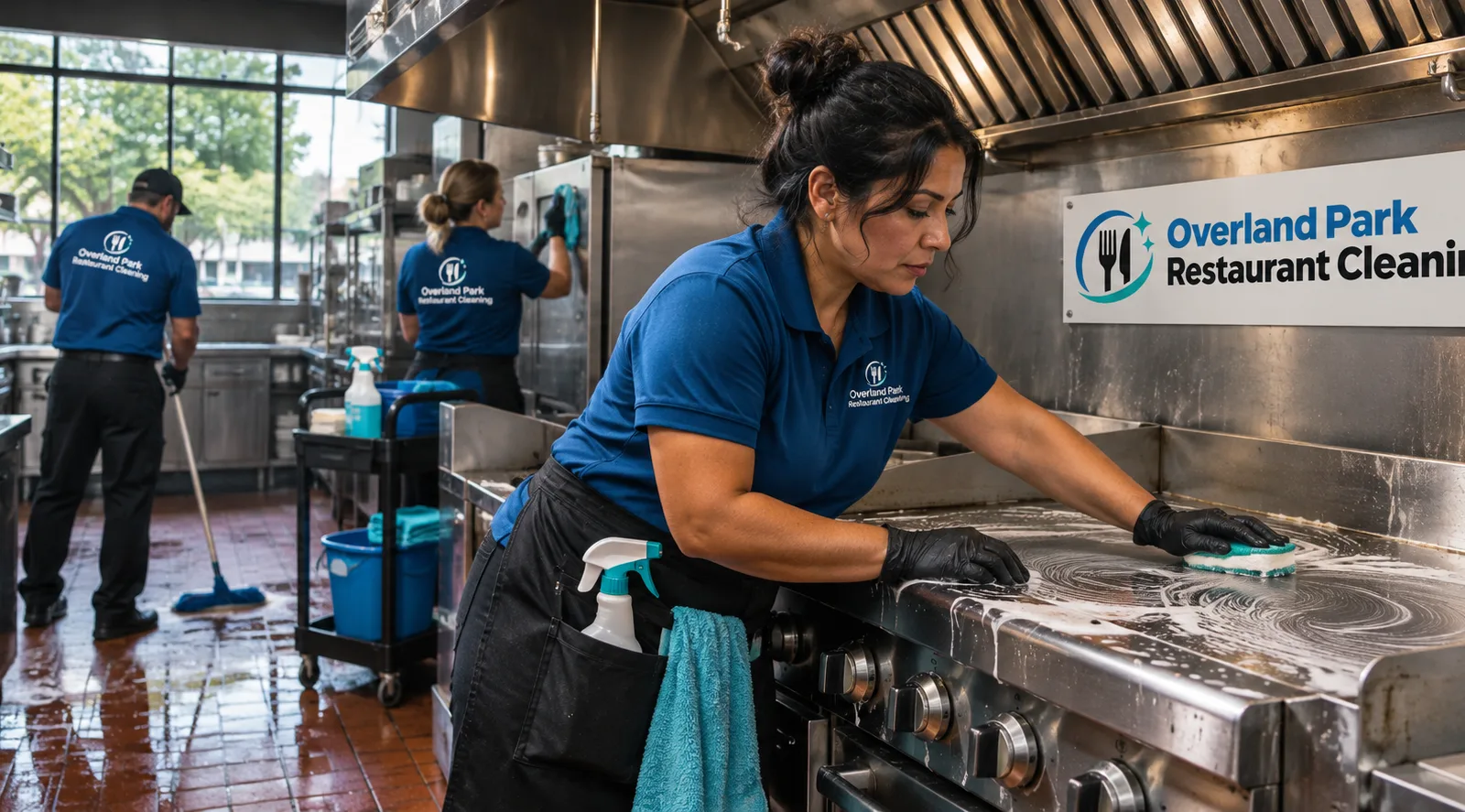
Accessible equipment exteriors, splash zones, control-area surrounds, and gaps beside movable units can be treated for grease and food residue. Equipment is handled according to access and manufacturer limitations.
Serving Overland Park, Kansas & surrounding areas
Open 24/7
Restaurant Kitchen Cleaning · Prairie Village
Detailed cleaning for cooking lines, prep areas, floors, and overhead surfaces, planned around your operating schedule.
Facility-Specific Care
Grease, food residue, carbon buildup, and airborne dust collect in places that routine closing work may not fully reach. Restaurant Kitchen Cleaning Prairie Village service addresses those problem areas with a defined scope based on the kitchen's equipment, condition, access, and operating hours.
Overland Park Restaurant Cleaning handles this work as an experienced restaurant team in Overland Park serving nearby Prairie Village establishments. Before cleaning begins, we identify the surfaces included, discuss access to equipment, and establish which areas need degreasing, detailed sanitation, or high dusting. That preparation gives managers a practical plan for the work and helps crews avoid interfering with food preparation.
A professional deep clean should support, rather than replace, the restaurant's daily sanitation program. Staff remain responsible for routine cleaning and food-safety procedures, while periodic service targets accumulated soil in less accessible areas. The frequency depends on cooking volume, menu, equipment arrangement, and how quickly grease or dust returns.
Scope of Work
Every kitchen has different cleaning priorities. A compact line with fryers and a griddle may need intensive degreasing around equipment edges and nearby walls. A bakery or prep-heavy operation may have less aerosolized grease but more flour, crumbs, and dust on elevated surfaces. We inspect the work area and define what can be cleaned safely without damaging finishes or disrupting equipment.
Typical scopes may include accessible exterior equipment surfaces, stainless steel tables, backsplashes, wall areas, shelving, floor edges, baseboards, and the spaces under or behind movable equipment. Degreasing products need suitable dwell time before agitation and rinsing or wiping. Separate tools should be used where necessary to limit cross-contamination between floors, food-contact zones, and other surfaces.
Exhaust hood, duct, and fan cleaning is a specialized fire-safety discipline and should not be assumed to be part of general kitchen cleaning. The written scope should state clearly whether hood-system work is excluded or assigned to a qualified provider. Likewise, restaurant staff should remove or protect exposed food, utensils, and smallwares before deep cleaning starts.
Cleaning Specification
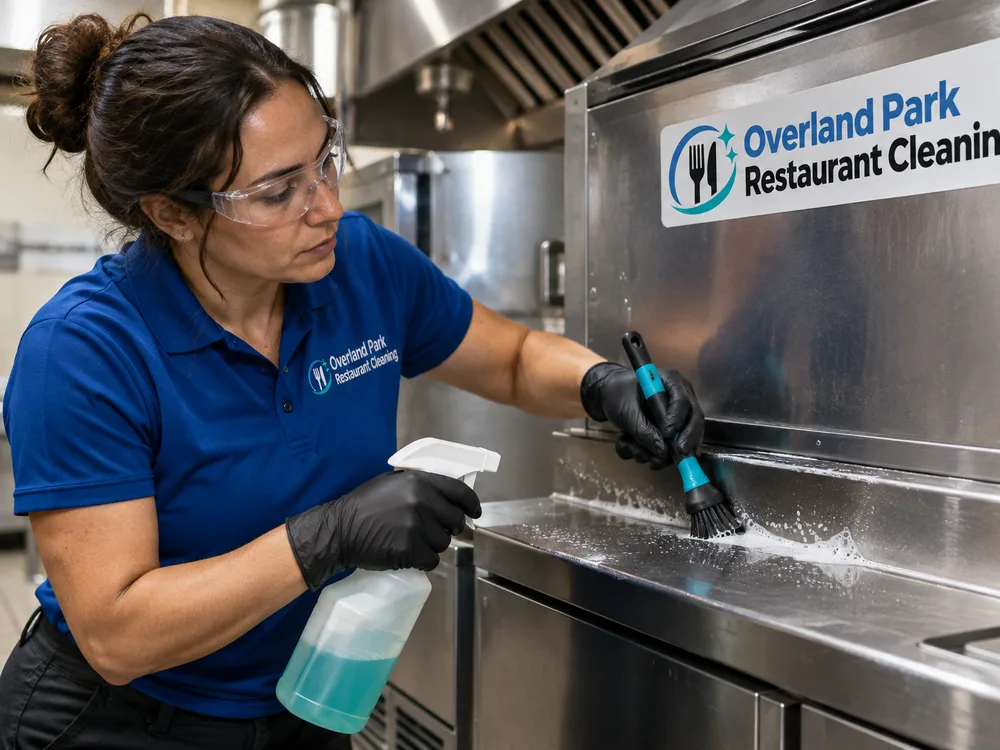
Accessible equipment exteriors, splash zones, control-area surrounds, and gaps beside movable units can be treated for grease and food residue. Equipment is handled according to access and manufacturer limitations.
Tables, shelving, ledges, and nonporous wall surfaces can be cleaned according to their material and intended use. Food-contact surfaces require appropriate products, rinsing, and restaurant sanitation procedures.
Soil often accumulates at grout lines, floor-wall transitions, under mats, and around equipment legs. Mechanical agitation or detailed hand work may be used when the flooring permits it.
Handles, push plates, switches, cooler exteriors, and other frequently handled surfaces can be included in the plan. These areas need cleaning before any applicable sanitizing step.
The scope can address washable waste-station surfaces, surrounding floors, and splash marks. Trash removal arrangements and access to exterior waste areas should be confirmed beforehand.
Accessible pipes, ceiling vents, light housings, wall ledges, and high shelving can collect dust mixed with grease. High work requires proper tools, safe access, and protection of the surfaces underneath.
Overhead Cleaning
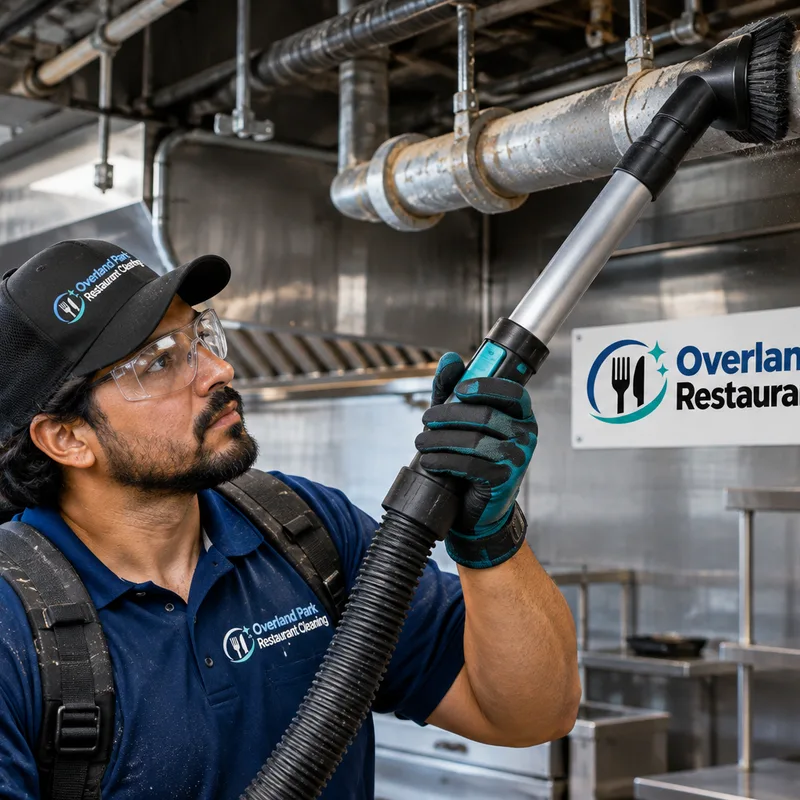
Restaurant High Dusting Prairie Village service focuses on elevated surfaces that are easy to miss during daily cleaning. Depending on access and material, this may include exposed pipes, conduit, wall ledges, upper shelving, vent exteriors, light housings, and other overhead structures. Loose dust can fall onto lower surfaces if the sequence is wrong, so work generally proceeds from high areas to low areas.
Containment matters in a commercial kitchen. Food and clean utensils should be removed or covered, and preparation should stop in the active work zone. HEPA-filtered vacuuming, extension tools, microfiber materials, and controlled wiping can reduce the spread of loosened debris. Dry dusting that pushes particles into the room is usually a poor choice around food-service areas.
Prairie Village restaurants near established shopping areas such as The Shops of Prairie Village and Corinth Square may have narrow service windows because kitchens support lunch and dinner traffic. Scheduling during a closed period gives surfaces time to be cleaned, checked, and returned to service before prep resumes. Kansas City's humid summers can also make greasy residue tackier, which may increase the dwell time and agitation needed on affected surfaces.
Cleaning Process
Step 1 of 4
We discuss the cooking equipment, trouble spots, operating schedule, access limits, and any surfaces that require special care. Photos or an on-site review may be needed for an accurate scope.
Step 2 of 4
The plan identifies included areas, exclusions, timing, and what restaurant staff must move, empty, cool, or protect. Gas and electrical equipment should be handled only according to safe shutdown procedures.
Step 3 of 4
The crew protects adjacent items and starts with overhead dusting when it is included. Degreasing, agitation, detail work, and floor cleaning then follow in a sequence that limits recontamination.
Step 4 of 4
Cleaned areas are checked against the agreed scope. Management can review any inaccessible spots, maintenance concerns, or areas that may benefit from a recurring schedule.
Scope and Pricing
Restaurant kitchen cleaning is usually quoted from the actual workload rather than dining-room capacity alone. The main cost drivers are kitchen size, current soil level, equipment density, the amount of hand detailing, high-surface access, and the time available to complete the work. A line that has limited clearance between appliances may take longer than an open layout of similar size.
Other factors include whether equipment can be moved safely, whether overnight access is required, and whether the job needs ladders or extension equipment for high dusting. Material condition matters too. Stainless steel, painted walls, quarry tile, grout, rubber flooring, and acoustic ceiling materials cannot all be treated with the same chemical or method.
A written estimate should identify the included surfaces and any access assumptions. It should also distinguish cleaning from sanitizing. Cleaning removes soil; sanitizing is a separate step performed on an already clean surface with an appropriate product, concentration, contact time, and procedure. Exact pricing is best confirmed after the kitchen and requested scope have been reviewed.
Get a clear cleaning scope based on your kitchen, operating hours, equipment access, and high-dusting needs before work is scheduled.
Call for a Free QuoteFrequently Asked Questions
The right frequency depends on cooking volume, menu, equipment layout, and how quickly grease or dust accumulates. Frying and grilling operations may need certain areas addressed more often than low-grease prep kitchens. Daily staff cleaning should continue between professional visits, while recurring service can focus on equipment surrounds, floor edges, elevated ledges, and other difficult areas.
Yes, after-hours or closed-day scheduling may be possible when arranged in advance. The kitchen must provide safe access, adequate cooling time for equipment, and a clear plan for alarms, doors, and management turnover. Restaurants with tight lunch and dinner schedules near The Shops of Prairie Village may find a closed period more practical than working around active preparation.
Exhaust hood, duct, and fan cleaning should be treated as a separate specialized scope unless it is explicitly included in writing. General cleaning may address accessible exterior surfaces around the cooking line, but internal grease-exhaust systems involve distinct equipment, documentation, and fire-safety considerations. Confirm the boundary before approving the work.
Staff should remove or secure exposed food, utensils, smallwares, and personal items from the work zone. Equipment included in the scope may need to be emptied, shut down, and fully cooled. Management should also identify fragile finishes, equipment that cannot be moved, water access, drainage limits, and any areas that must remain operational.
High dusting is performed in an inactive, protected work area using controlled methods such as HEPA-filtered vacuuming and microfiber wiping where suitable. Food and clean wares should be removed or covered before work starts. Cleaning proceeds from elevated surfaces downward so floors and lower fixtures can be cleaned after overhead debris is captured.
The duration depends on kitchen size, buildup, equipment density, access, and the requested scope. A focused cleaning of selected surfaces may fit within a shorter closed period, while a heavily soiled kitchen with overhead work can require a longer window. Timing is confirmed after the work area has been reviewed.
Behind-equipment cleaning is possible only when the units can be moved safely and the area is included in the agreed scope. Restaurant staff or qualified technicians may need to disconnect or reposition equipment involving gas, electricity, water, or rigid ventilation connections. The crew should not move equipment when doing so risks injury or property damage.
Plan Your Cleaning Scope
Tell us about your restaurant, schedule, and priority areas so we can discuss a practical cleaning scope.
Request a Quote
After you submit the form, our team will review your details and contact you to discuss the next step.